
What Does a Land Prep Company Actually Do? Services Explained for New Texas Landowners

What Does a Land Prep Company Actually Do? Services Explained for New Texas Landowners
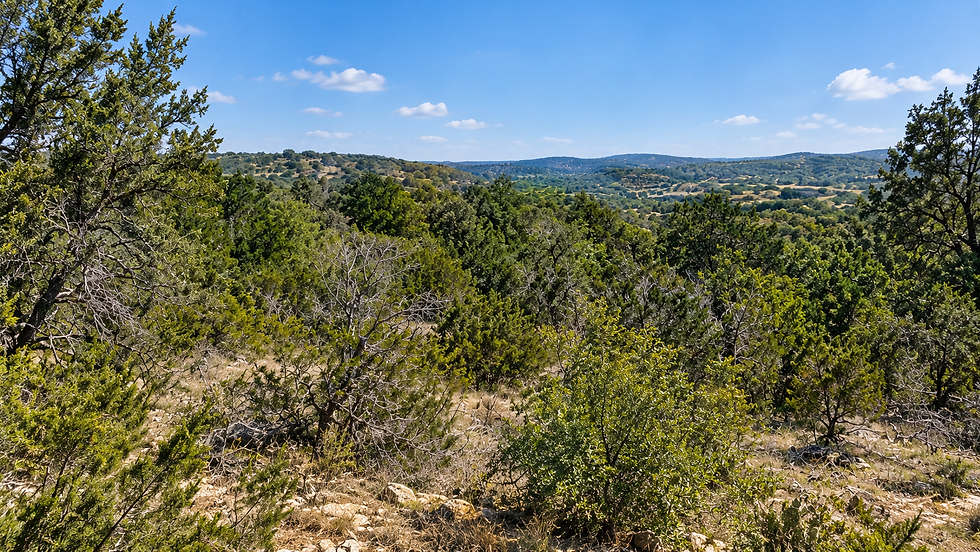
You just closed on Texas Hill Country acreage, and now you're staring at a piece of raw land wondering where to even start. What does a land prep company actually do?
In plain terms: a land prep company turns raw, undeveloped land into something you can build on, drive across, or put water on — through four connected services that usually happen in a specific order.
Dustin Gass built LandPrep.com around all four, because on Texas Hill Country property they rarely happen in isolation. Understanding how they connect is the fastest way to plan your project instead of guessing at it.
Table of Contents
What "Land Prep" Actually Covers
Land prep isn't one service — it's an umbrella term for the work that happens between "I bought land" and "I can build, ranch, or drive on this land." On most Texas Hill Country properties, that umbrella breaks into four pieces: land clearing, site prep, road building, and pond building.
Land Clearing vs. Site Prep — The Question Everyone Asks First
These two get confused constantly, and the difference matters. Land clearing removes what's already on the land — cedar, brush, unwanted trees, stumps, and roots — to expose bare, workable ground. Site prep is what happens next: grading, cut-and-fill, and preparing that cleared ground into a stable, level pad ready for a foundation. You almost always need clearing before site prep can start.
Why the Order of Operations Matters
Skipping steps or doing them out of order is how projects go over budget. A pad graded before the site is fully cleared of organic material ends up with roots and debris buried under it — a foundation problem waiting to surface years later. Land prep services in Texas done right follow a sequence: clear, then grade, then build access, then add water infrastructure if the property calls for it.
Land Clearing — Getting the Property Ready to Work With
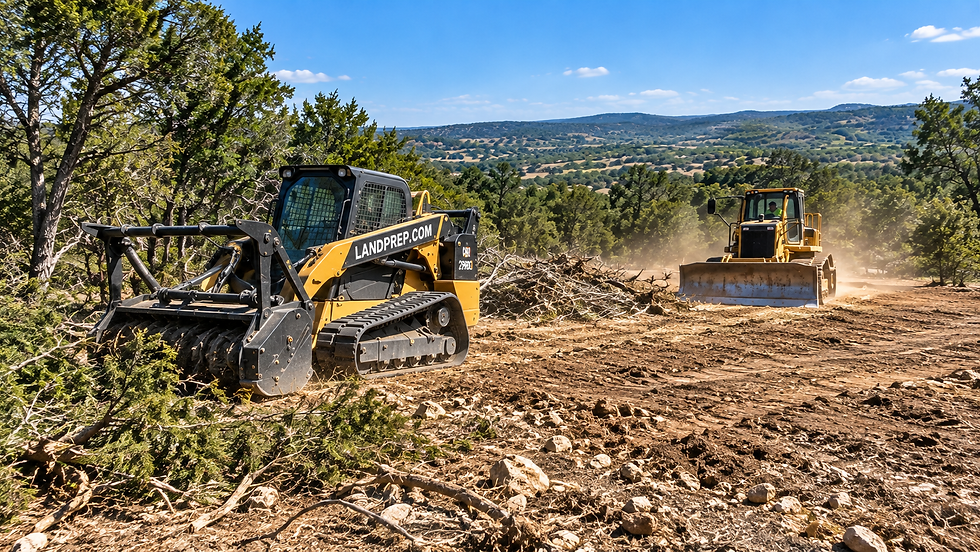
Before anything else happens, cedar, brush, and unwanted trees need to come out — root and all, not just cut down, or they resprout and cause problems later. LandPrep.com always protects live oaks during this process and runs a free tree protection program on every clearing job, because the goal is removing what shouldn't be there, not everything that is.
Site Prep — Turning Raw Land Into a Buildable Pad
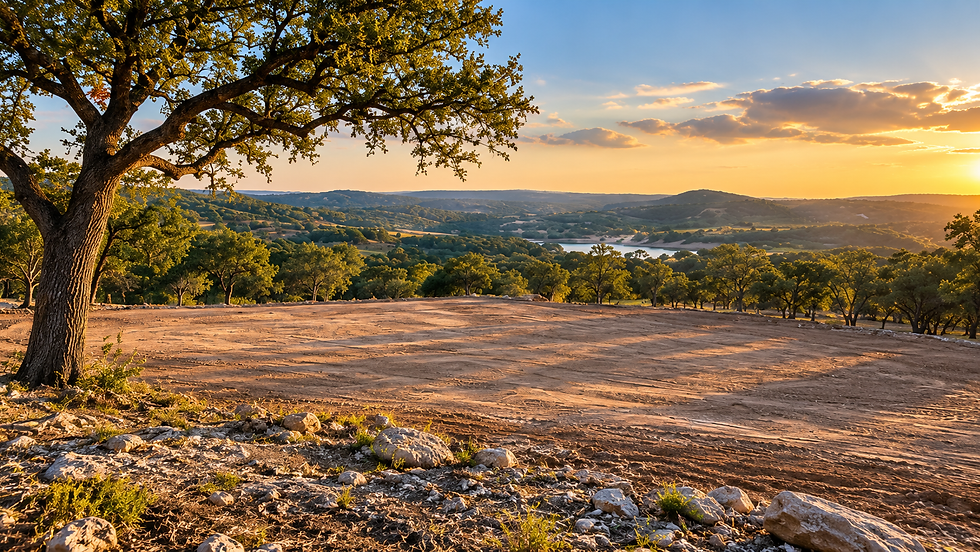
Once a lot is cleared, site prep grades it into a stable, level pad using cut-and-fill — moving earth from the high points to the low points until the site is ready for a foundation. A site prep contractor in the Texas Hill Country has to account for Edwards Plateau limestone, which changes both the equipment needed and the cost compared to flat, rock-free terrain elsewhere in the state.
Road Building — Getting Equipment and Traffic to the Site
Most raw Texas Hill Country acreage doesn't have a real road to it, just a rough path or nothing at all. Road building establishes proper access — crowned, well-drained, and built on compacted road base — so construction traffic, and eventually everyday vehicles, can reach the property without tearing it up every time it rains.
Pond Building — Water Features and Ranch Infrastructure
Not every property needs a stock tank, but plenty of Texas Hill Country landowners want one for livestock, wildlife, or a place to swim. Most stock tanks fall under Texas's 200-acre-foot permit exemption for domestic, livestock, or wildlife use, but site selection matters just as much as the legal side — Edwards Plateau limestone can seep water out of a poorly sited pond as fast as rain fills it.
LandPrep.com serves Comal, Kendall, Blanco, and Kerr counties — Contact Dustin to receive a FREE site visit and find out which of these services your property actually needs.
You don't have to know which service comes first — you just need a contractor who handles all four and can tell you the right order for your property.
Ask any contractor:
Do you handle clearing, site prep, road building, and pond work, or just one piece of it?
What order do you recommend for my specific property, and why?
How does the Edwards Plateau terrain on my lot change your approach?
If they don't have clear answers, hire someone else.
Frequently Asked Questions: Land Prep Services for New Landowners
What's the difference between land clearing and site prep?
Land clearing removes what's already on the property — cedar, brush, trees, stumps, and roots — to expose bare ground. Site prep is the grading and cut-and-fill work that follows, turning that cleared ground into a stable, level pad. Clearing almost always has to happen first.
Do I need all four services, or just some of them?
It depends on your plans for the property. A build site typically needs clearing and site prep at minimum, plus road access if there isn't a usable driveway already. Pond building only applies if you want a stock tank or ranch pond. A land prep company should assess your specific property rather than selling you services you don't need.
How much does land prep cost for raw Texas Hill Country acreage?
Cost varies widely based on acreage, cedar density, elevation change, and how much limestone excavation the site requires. Two similarly sized lots can have very different costs depending on terrain — get a site visit and itemized estimate rather than comparing generic per-acre numbers.
What order should these services happen in?
Generally: clear the land first, then grade and prep the building site, then establish road access if needed, with pond building fitting in wherever it makes sense for the property's layout and water source. Skipping or reordering steps usually costs more in the long run.
I just bought raw land — where do I even start?
Start with a site visit from a contractor who can walk the property with you and identify what it actually needs before you commit to a plan. LandPrep.com offers a free site visit and estimate specifically for new landowners trying to figure out where to begin.


