
How to Find a Reputable Land Clearing Contractor in the Texas Hill Country

How to Find a Reputable Land Clearing Contractor in the Texas Hill Country
Search for a land clearing contractor in the Texas Hill Country and you'll get pages of results — most of them look identical. Same stock photos of mulchers in the brush, same list of services, same promise of "affordable" clearing.
What separates a contractor who does the job right from one who leaves you with a mess in a year isn't on the homepage. It's in the answers to a handful of specific questions.
Dustin Gass built LandPrep.com around one rule: do it right the first time.
Here's exactly what that means to ask before you sign anything.
Table of Contents
What "Reputable" Actually Means in This Industry
Land clearing has a low barrier to entry — a chainsaw, a skid steer, and a Facebook page is enough to call yourself a clearing contractor. That's exactly why how to hire a land clearing company in Texas comes down to specific, verifiable answers rather than a polished website.
Licensing, Insurance, and What to Actually Confirm
Texas doesn't require a statewide contractor license for land clearing, which means insurance and liability coverage are where the real vetting happens. Ask to see proof of general liability insurance before equipment ever touches the property — if a contractor hesitates or can't produce it quickly, that's a decision made for you.
References From Jobs Like Yours
A contractor who's done dozens of right-of-way mulching jobs isn't automatically qualified to clear a build site, and vice versa. Ask for references from a job similar in scope and purpose to yours, ideally somewhere nearby — a finished pad site clearing in Kendall County tells you more than a fenceline job three counties over.
The Questions That Actually Separate Contractors
This is the core of vetting any land prep company in the Hill Country — five questions, asked directly, with answers that should be immediate and specific.
What's Your Stump and Root Removal Policy?
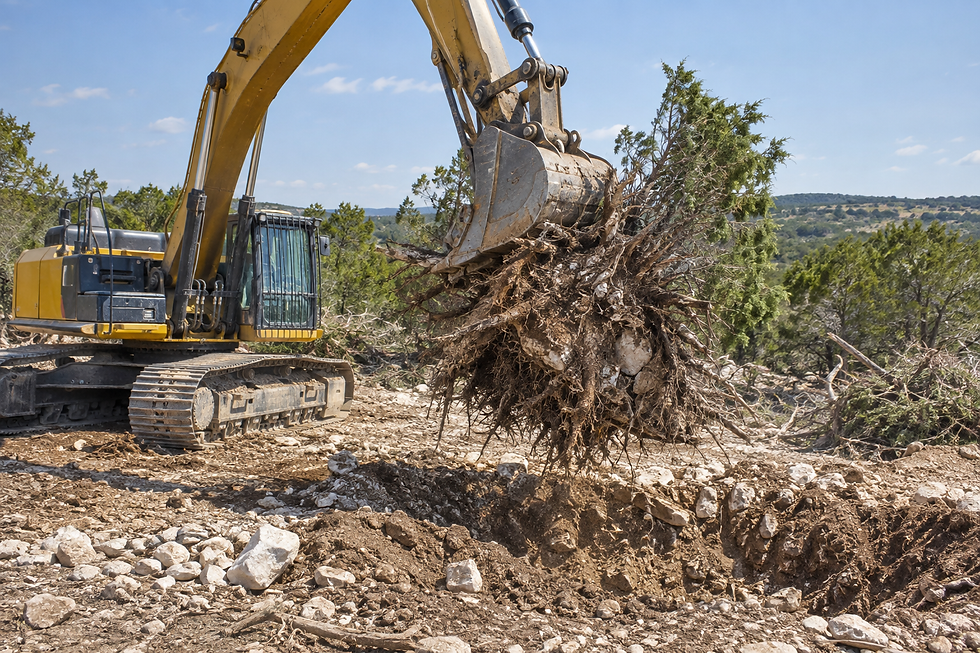
Cutting a tree at ground level and calling it cleared leaves the stump and root ball behind, which resprouts, rots into voids under future construction, or just sits there as a problem for years. A contractor who does it right pulls the root system out, not just the visible trunk. Ask exactly what "cleared" means in their contract before signing.
What Equipment Are You Actually Running?
Small equipment can't pull large stumps or place heavy stone, and it takes longer to do jobs that bigger machinery handles cleanly. LandPrep.com runs excavators and equipment sized for Edwards Plateau conditions — ask any contractor what they're bringing to the site and whether it matches the scope of the job, not just the smallest thing that fits down the driveway.
How Do You Protect the Trees I'm Keeping?

Clearing cedar or brush around live oaks without a protection plan is how good trees get damaged by equipment, root compaction, or careless cutting. LandPrep.com runs a free tree protection program on every land clearing job specifically so the trees worth keeping survive the job. Ask what a contractor's protocol is — fencing off root zones, marking trees to avoid, careful equipment routing — and whether it's written into the plan or just a verbal promise.
What's Your Drainage Approach?
Clearing changes how water moves across a property, and a contractor who doesn't think about drainage until after the fact can leave a landowner with erosion or standing water that wasn't there before. Ask how the job accounts for existing drainage patterns and where cleared material and runoff will go.
Can You Show Me Finished Work Nearby?
Photos on a website can be anyone's job. Ask for a specific, recent, local example — a finished clearing in Blanco or Kerr County you can actually drive by, or at minimum verified before-and-after photos with the property's general location. A contractor confident in their work will offer this without hesitation.

Red Flags Worth Walking Away From
Some patterns show up consistently on jobs that went wrong, and they're worth naming plainly.
Vague Contracts and Verbal-Only Promises
If "stump removal" or "tree protection" isn't written into the contract, it isn't guaranteed. Verbal assurances during a sales visit mean nothing once equipment is on-site and the crew is being paid by the day, not the outcome.
Pressure to Sign Fast, or a Bid That's Dramatically Lower
A bid significantly below every other quote usually means something's being skipped — root removal, insurance, proper equipment, or all three.
Dustin Gass's approach has always been to quote what the job actually requires, not what gets a signature the fastest.
LandPrep.com serves Comal, Kendall, Blanco, and Kerr counties — Contact Dustin to receive a FREE land clearing estimate and see how these answers compare.
You don't have to become an expert yourself — you just need to ask the right questions before anyone signs anything.
Ask any contractor:
Are stumps and roots being pulled, or just cut down?
What's your written tree protection plan for the trees I'm keeping?
Can I see insurance proof and a recent, local finished job?
If they don't have clear answers, hire someone else.
Frequently Asked Questions: Hiring a Land Clearing Contractor
How much does land clearing cost in the Texas Hill Country?
Cost varies significantly based on acreage, cedar density, terrain, and whether stump and root removal is included. A bid that's far below others usually signals something is being left out — ask exactly what's included before comparing price alone.
Is forestry mulching or full clearing better for my property?
It depends on the goal. Forestry mulching works well for right-of-ways, fencelines, and easements where regrowth control isn't critical. For a build site or pasture reclamation, root removal is usually the right call since mulching alone leaves roots that can resprout or interfere with grading.
Do I need a permit to clear land in the Hill Country?
Requirements vary by county and city jurisdiction, and some areas have tree preservation ordinances that protect certain species or sizes. Confirm with your local county before clearing — a reputable contractor should be able to tell you what applies to your property or point you to the right office.
How do I know if a contractor is actually insured?
Ask for a certificate of insurance directly, not just a verbal confirmation. A legitimate contractor can produce this quickly; hesitation or delay is worth taking seriously.
What should be in a land clearing contract before I sign?
At minimum: exactly what "cleared" includes (stumps and roots or just cutting), which trees are being protected and how, drainage handling, timeline, and total cost with no vague allowances. If any of that is missing, ask for it in writing before signing.


