
Cedar Removal in the Texas Hill Country: What It Really Costs Per Acre


Digging In to Cedar Removal in the Texas Hill Country
You've priced out a few quotes for cedar removal on your Hill Country acreage, and the range is baffling — maybe $1000 an acre from one guy, maybe $6,000 from another.
What's the difference? And does it matter?
It matters enormously. The right answer depends on two things most landowners don't know to ask: what do you plan to do with the land, and what methods are the contractors actually using?
Dustin Gass at LandPrep.com has been clearing acreage across Comal (Spring Branch, Bulverde, Canyon Lake, and New Braunfels), Blanco, and Kendall (Boerne) counties for years (and don’t forget about Bexar County/San Antonio).
Here's what he wants you to know before you sign anything.
Table of Contents
Land Clearing Methods: Forestry Mulching Vs Cedar Removal in Texas
The Build Site Problem — What Your Other Contractor Didn't Tell You
Why Hill Country Terrain Drives Up the Price of Land Clearing and Cedar Removal
Land Clearing Quotes for Comal, Blanco, and Kendall Counties
What You're Actually Paying For — The Cost Ranges
What Does Cedar Removal Cost Per Acre in the Texas Hill Country?
Cedar removal cost in the Texas Hill Country (Comal, Blanco, and Kendall counties) varies greatly from company to company.
Most companies won’t publish pricing on their websites or flyers because every land clearing job is unique and requires custom quoting.
It’s best to have a company representative visit your job site so that they can give you an accurate estimate of the job based on their expertise.


Why is Cedar Clearing so Expensive?
Cedar trees are an invasive species, not native to the Texas Hill Country. They spread quickly and prolifically. They crowd native oak trees, making it difficult to remove the cedar without damaging the oak.

‘Cedar removal’ and ‘land clearing’ don’t always mean the same thing.
Cedar removal in the Texas Hill Country involves clearing cedar while preserving oak. This takes time, finesse, experience, and the right equipment.
Another factor that makes cedar removal and land clearing so expensive in the Texas Hill Country is our Edwards Plateau limestone bedrock and our beautiful rolling hills. We will detail this later in this article.
Finally, the debris disposal method directly affects cost. If debris is to be mulched and spread, this will add time to a job.
How Much Does it Cost to Clear Cedar Per Acre in Texas?
Dustin Gass, owner of LandPrep.com, suggests budgeting ~$5000 per acre for proper land clearing.
This price may increase or decrease depending on many factors, which we will discuss.
LandPrep.com removes invasive cedar trees by the roots, leaving nothing behind, while preserving native oak trees and leaving them unscathed. Forestry mulching, also referred to as ‘cedar eater’ style mulching, produces very different results.

Looking to save some money on cedar removal and land clearing? Removed trees can be piled up to be burned at a later date rather than mulched.
Continue reading — it’s important you understand why paying less could cost you more in the long run.
Land Clearing Methods: Forestry Mulching Vs Cedar Removal in Texas
The Method Matters More Than the Price Tag
There are two methods that LandPrep.com uses in Comal, Blanco, and Kendall counties to remove cedar trees.

Option A: Complete Root Extraction (Pull and Pile)
LandPrep.com pulls cedar trees out, including the stump and the majority of the tap root system
Trees are piled and burned on-site, chipped on-site, or hauled away
More labor-intensive and typically higher cost upfront
RIGHT for any property where you're planning to build a home, place a structure, install a foundation, or grade a pad site.

Option B: Forestry Mulching ("Cedar Eater" Style)
A mulching machine grinds the tree where it stands, shredding it into chips and leaving a thick blanket of large debris on the surface
Faster, often cheaper upfront, and visually appealing immediately after the job
A suitable option for right-of-ways, utility easements, and roads along ranch fencelines
NOT RIGHT for build sites, foundation prep, pad sites — and this is where LandPrep.com stands apart from the competition.
Forestry Mulching Pros & Cons in the Texas Hill Country
Pros: Forestry mulching is fast and cheap. It’s a highly affordable option for getting rid of invasive cedar trees quickly.
Cons: Forestry mulching will not allow native grasses to return, and does not create a cleared site ready to build on. It is not visually appealing for landowners.

What Method Should I Use to Clear Cedar on My Land?
If you plan to build a home or structure in an area where cedars will be removed, you need to choose the “pull and pile” cedar removal method. Building code in Texas prohibits stumps in the ground. Forestry mulching leaves stumps and roots behind.
Furthermore, pull and pile is healthier for the land from a conservancy standpoint, as it allows native grasses to return quickly.
Cedar removal is one of the best decisions you can make if you want to invest in the beautification and preservation of your valuable Texas Hill Country property.

The Build Site Problem — What Your Other Contractor Didn't Tell You
If You're Planning to Build, the Cheap Quote Could Cost You Thousands
Let’s discuss the hidden truth behind fast & cheap land clearing methods like forestry mulching.
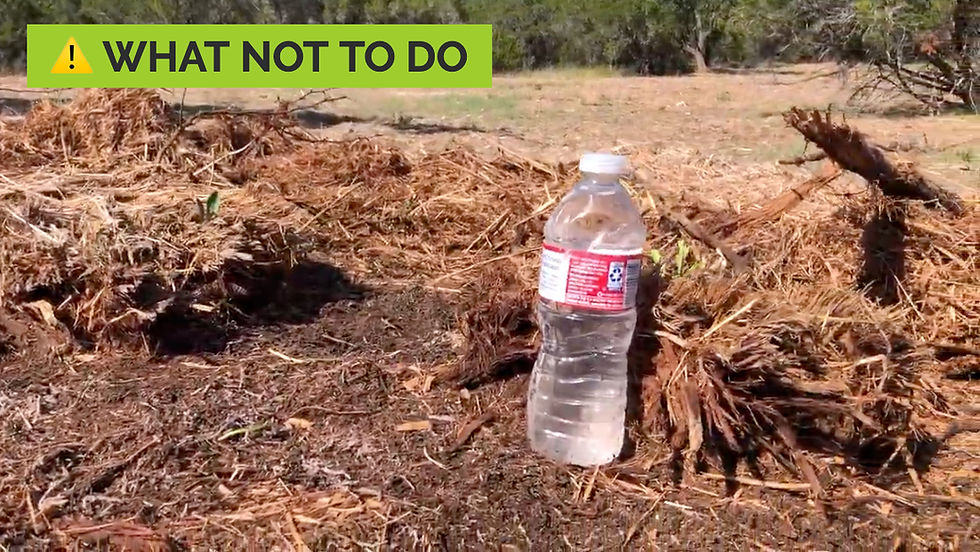
Forestry mulching leaves a deep layer of large shredded cedar chips across the cleared surface. This mulch does not break down into usable soil quickly — it dries, mats, and can sit on top of your ground for many years, essentially creating a layer of non-compactable organic material.
Beneath that mulch? Shredded stumps, still rooted or partially rooted in the ground.
What Happens if You Leave Stumps in the Ground Before Building?
Your home builder will require you to pay to have these remaining stumps removed completely before starting on your new home build.
Stump grinding is not sufficient — Texas building code requires stumps and roots to be completely absent from building sites.
Does Cedar Mulch Cause Foundation Problems?
Organic material under or near a foundation is a serious structural problem — as wood breaks down, the soil shifts; that shifting causes foundation movement.
Mulch near foundation walls also traps moisture and creates termite-friendly conditions — a compounded risk in the Hill Country.

The "Cheap Now, Expensive Later" Cycle
A landowner who hires a mulching-only crew before site prep will face a second round of land clearing — stump grinding, root removal, and debris haul-off — before any builder can begin grading.
That second round often costs more than doing it right the first time.
LandPrep.com not only offers the best cedar removal and land clearing services in the Texas Hill Country, but they are also experts at site prep for home building!
Choose the best company first and save more money in the long run with a job done right.
Protecting Your Live Oaks
Your Live Oaks Are Irreplaceable — Treat Them That Way
Live oaks are native to the Hill Country, drought-tolerant, water-efficient, and can live for centuries on the Edwards Plateau.
Live oaks are perfectly adapted to our ecosystem and are an iconic Texas Hill Country species.
They grow slowly — damaging a live oak during cedar removal and land clearing is not always a recoverable situation.

A good contractor (LandPrep.com) will identify trees to preserve before the equipment starts moving and establish protection protocols.
LandPrep.com offers a free program to ensure the trees you want to keep remain healthy and undamaged by heavy equipment.

Does Land Clearing Damage Live Oak Roots?
Not all contractors and heavy equipment operators are created equal. Careless heavy equipment operators working for competitors can tear up root zones, compact soil, and cause both visible cosmetic damage and invisible subsurface damage to live oak root systems, even when the tree looks healthy initially.

Oak Wilt Prevention During Land Clearing
If any limb work is done on live oaks, it must be done correctly — clean cuts, not tears — and exposed wood should be treated with wound sealant to prevent oak wilt infection.
When Cedar Forestry Mulching Can Be the Right Call
When Forestry Mulching Makes Perfect Sense
Here are a few unique situations where forestry mulching (‘cedar eater’ style) can be a viable option for your land clearing needs:
Water reclamation — cedar trees monopolize water supply from other native trees
Improving hunting habitat and wildlife management — creating sederas (cleared swaths of land) allows wildlife and livestock to move more freely across your land
Fire mitigation — reducing fuel load along structures or property lines
Aesthetic clearing to open views and improve property value without a build planned
In these cases, forestry mulching is cost-effective, ecologically reasonable, and faster.
Keep in mind, forestry mulching leaves behind a thick mat of organic material that will be slow to break down, as well as shredded stumps that are still rooted in the ground.
⚠️ Native grasses, or useful vegetation of any sort, will not grow in the path of forestry mulching.
If you intend for the land to be navigable by any type of vehicle, forestry mulching is not the best option for you.

Why Hill Country Terrain Drives Up the Price of Land Clearing and Cedar Removal
The Hill Country Is Not Flat Texas — And Your Quote Should Reflect That
Sloped terrain (common in the Blanco River Valley and upper Guadalupe drainage areas) requires equipment with different specifications and slower operating speeds, as well as equipment operators who are well-versed in our unique Hill Country terrain.
Why Does Land Clearing Cost More in the Hill Country Than Other Parts of Texas?
The Edwards Plateau limestone bedrock in Comal, Blanco, and Kendall counties means rocky terrain is expected.
This rocky terrain slows equipment down and sometimes makes cedar removal more difficult (and forestry mulching near impossible!). Rocky terrain can also cause costly equipment damage.

Additionally, shallow soil over rock limits root depth and changes how stumps are extracted.
Finally, if your build site is tucked away at the back of your property, machinery can't always access this back acreage without extensive land clearing work done first.
Cedar Removal Estimates in Comal, Blanco, and Kendall Counties
All of these factors are why legit Hill Country contractors, like LandPrep.com, quote after a site visit — not over the phone.
Land clearing quotes in Comal, Blanco, and Kendall counties can vary greatly, and it’s important that you evaluate not only the land clearing method, but disposal method and ultimate plans for the cleared site.
When obtaining a land clearing and cedar removal estimate, total cost should be evaluated by the job, not by the hour.

Land Clearing Quotes for Comal, Blanco, and Kendall Counties
Get a Quote That Accounts for Your Future Plans
You don't have to be a land clearing expert — you just need to hire one who asks the right questions before starting.
Ask any contractor:
What happens to the stumps?
What's left behind after you're done?
What do you recommend for a property where I plan to build?
If they don't have clear answers, hire someone else.
LandPrep.com serves Comal, Blanco, Kendall, and surrounding counties — Contact Dustin to receive a FREE site visit and estimate.

Frequently Asked Questions: Land Clearing and Cedar Removal
Can I mulch cedar on a home build site Texas?
No. Cedar mulch on a home build site in Texas will cause future foundation problems and encourage termite activity.
How can I protect oak trees during cedar removal in Texas?
Protecting oak trees during land clearing involves careful and skilled operation of heavy equipment, and can even involve armoring trees with extra protection in tight areas. LandPrep.com does not charge extra for this premium level of oak tree protection.
How much does cedar removal cost per acre in the Texas Hill Country?
Ranges from $1000–$2000/acre for light clearing to $3000–$6,000+/acre for dense old-growth cedar on rocky terrain. Method, terrain, and debris disposal all affect the final cost.
Dustin Gass, owner of LandPrep.com, suggests budgeting ~$5000 per acre for proper cedar removal and land clearing around home build sites.
Is forestry mulching okay if I'm planning to build?
No. Mulching leaves, shredded wood debris, and partial stumps in the ground that must be removed before any foundation or pad site work can begin. On a build site, complete root extraction is the right method.
Does cedar removal increase property value?
Yes. Cleared, managed acreage typically shows higher value to buyers and appraisers. Views open up, usable acreage increases, and native grasses can reestablish.
Will cedar come back after removal?
Ashe juniper (the dominant cedar species in the Hill Country) dies when cut at the root. However, cedar seeds remain in the soil, so a property can see new growth within 7–8 years and may need a follow-up treatment or customer maintenance.
How do I protect my live oaks during cedar removal?
Establish a tree protection zone before equipment moves. A good contractor, like LandPrep.com, will identify trees to preserve, use machinery that doesn't compact root zones, and apply wound sealant to any limbs that are cut or scrapes on trunks.
